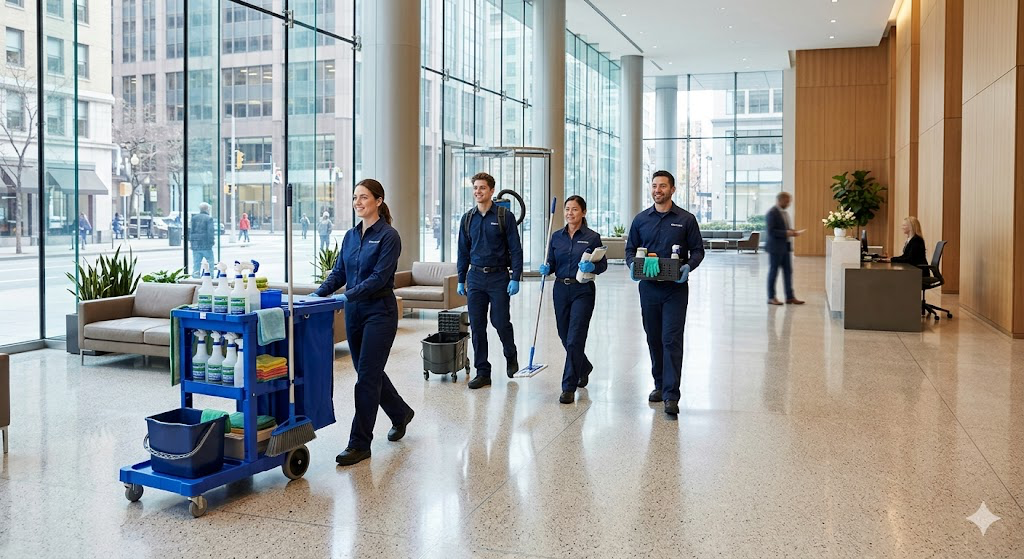
Your cleaning crew has access to private offices, residential homes, medical facilities, and hotel suites — often with no one watching. That level of access builds trust, and trust is exactly what a janitorial bond is designed to protect. One employee accusation of theft, founded or not, can unravel years of word-of-mouth reputation and expose your business to legal costs that far exceed the value of anything that went missing.
A janitorial bond is a type of fidelity bond that protects your clients if an employee steals from them while on the job. It reimburses the client for the loss and keeps you out of court. It is not legally required in any state, but commercial clients increasingly treat it as a non-negotiable contract requirement, and homeowners, Airbnb hosts, and property managers often refuse to hire a cleaning service that is not bonded.
This guide covers how janitorial bonds work, what they cost, how to choose the right coverage amount, and what gaps they do not fill.
What Is a Janitorial Bond?
A janitorial bond is a legally binding agreement between three parties. The Principal is the cleaning business — the company purchasing the bond. The Obligee is the client whose property is being cleaned. The Surety is the bond company that backs the obligation and pays valid claims.
When you purchase a janitorial bond, you are not buying protection for yourself. The bond protects your clients. If one of your employees steals cash, jewelry, electronics, or other property from a client’s home or office, the client files a claim with the surety company. If the claim is valid, the surety pays the client up to the full bond amount. You are then legally obligated to reimburse the surety for everything it paid out.
The bond also goes by several other names depending on the context: housecleaning bond, custodian bond, janitorial services fidelity bond, carpet cleaning bond, and business service bond. These are all interchangeable terms for the same type of coverage. It does not matter whether your company cleans residential homes, commercial offices, hotel rooms, or medical facilities — the bond structure is the same.
What a Janitorial Bond Covers — and What It Does Not
Janitorial bonds cover employee theft of client property while on the client’s premises. Some bond forms extend this to include fraud and forgery in addition to theft — ask your surety company what your specific bond form covers before purchasing. Coverage applies up to the full bond amount selected at the time of purchase.
What the bond does not cover is equally important to understand. The janitorial bond is not general liability insurance. It does not pay for property damage — if your employee drops and breaks a client’s vase, that is a general liability claim, not a bond claim. It does not cover bodily injury claims if a client slips on a wet floor you mopped. It does not cover professional liability, contract fulfillment, or vehicle accidents involving your company vehicles. For those risks, cleaning businesses typically carry general liability insurance, commercial auto coverage, and workers’ compensation. The bond and these insurance policies serve different functions and complement each other as a complete protection package.
One claim scenario that most cleaning businesses are not prepared for: what happens when a client accuses your employee of theft but there is no proof? Some bond forms require a criminal conviction before a payout occurs. Others allow claims based on allegations alone. The distinction matters. If a client demands reimbursement for a missing item and your bond requires a conviction, the client may not be made whole without a police report and subsequent conviction. Reimbursing on allegations — without requiring proof — can actually protect your business from something worse: a public dispute, a lawsuit, or a damaging review that costs you far more in lost business than the stolen item was worth. Understanding the specific payout terms of your bond form before a claim arises is not optional — it is essential.
Janitorial Bond vs. Employee Dishonesty Bond — Know the Difference
These terms are often used interchangeably in the industry, but they are not the same product. A janitorial bond covers theft of the client’s property by your employee. An employee dishonesty bond covers theft of your own property by an employee, and may also include coverage for client losses depending on how it is written. Employee dishonesty bonds generally offer broader coverage and may be appropriate for larger cleaning operations with more complex exposure. If you are looking for basic client protection on residential and commercial accounts, the standard janitorial bond is what most cleaning businesses need. If you want protection for your own business assets as well, ask your surety company about employee dishonesty bond options.
Why the Bond Protects Your Business, Not Just Your Clients
Most cleaning business owners think of the janitorial bond as something they buy for their clients. That is only partly true. The bond also protects the business owner from a far more expensive outcome: litigation.
If a customer claims employee theft and you do not carry a bond, you face a court proceeding with no financial backstop. In that proceeding, every employee involved in the job becomes a potential target. If you operate as a sole proprietor, LLC, or partnership, your personal assets — your savings, your vehicle, your home equity — are exposed because you and the business are legally one entity under those structures. Even if you operate as a corporation, court costs related to a theft claim can be enough to bankrupt a small cleaning company. Beyond the legal cost, a company can lose its commercial insurance entirely after an employee theft case goes to court, or face dramatically higher premiums on any renewal that follows.
The bond resolves the dispute before it becomes litigation. The surety pays, the client is made whole, and you repay the surety. Unpleasant, but vastly preferable to a court case.
How Much Does a Janitorial Bond Cost?
Janitorial bond premiums are determined by two factors: the number of employees and the coverage amount you select. Unlike many other surety bonds, janitorial bonds do not require a credit check — which means your credit score has no effect on your premium. Bad credit does not increase your rate and does not result in denial.
| Employees | $10,000 Coverage | $25,000 Coverage | $50,000 Coverage | $100,000 Coverage |
|---|---|---|---|---|
| 5 or fewer | $125 | $175 | $250 | $350 |
| 6–10 | $145 | $200 | $300 | $450 |
| 11–20 | $185 | $250 | $450 | $650 |
Some bond forms also offer a $5,000 coverage tier for very small operations, and a $75,000 coverage tier for companies that want more protection than $50,000 provides but less than the full $100,000. If you have over 25 employees, pricing requires individual underwriting and a quote from your surety provider.
Coverage amount selection should be based on the environments your crews work in. Residential homes and small commercial accounts are well served by $10,000–$25,000 in coverage. Large commercial accounts, government facilities, medical offices, and hotel properties carry higher-value assets and typically expect $50,000–$100,000 in bonding. If you are bidding on a new commercial contract, ask the client upfront whether they require a minimum coverage limit before you purchase.
Some surety companies also offer multi-year bond terms — typically three years — which can reduce the administrative burden of annual renewal for businesses with stable employee counts and no claims history.
Coverage Extensions Worth Asking About
A standard janitorial bond covers your W-2 employees. If your cleaning business uses independent contractors or subcontractors, confirm whether those workers are covered under your bond. Some bond forms can be extended to include independent contractors and volunteers — this is especially relevant for maid services, on-call cleaning crews, and event cleanup operations that rely on contract labor. Similarly, some bond forms offer an extension to cover the business owners and officers themselves, which is relevant for sole proprietors whose own conduct on a client’s property could be subject to a claim.
How to Get Your Janitorial Bond: Apply, Quote, Pay, File
Getting bonded takes less time than most cleaning business owners expect. The process is entirely online and can be completed in a matter of minutes.
Apply by selecting your employee count and desired coverage amount. Swiftbonds will walk you through the application — no financial statements, no credit check, and no SSN required for most janitorial bond applications. Provide your business name, contact information, and the effective date for your bond.
Get your Quote instantly based on the coverage tier and employee count you selected. Pricing is transparent and corresponds to the rate tables above.
Pay your annual premium online through a secure payment portal. Once payment is processed, your bond is issued immediately.
File your bond by delivering the bond certificate to your client or keeping it on file for contract verification. For commercial clients requiring proof of bonding before signing a service agreement, your bond certificate serves as that proof. You can obtain as many copies as your client relationships require.
Swiftbonds LLC
2024 Surety Bond Provider of the Year
4901 W. 136th Street
Leawood KS 66224
(913) 214-8344
https://swiftbonds.com/
FAQs About the Janitorial Bond
What is a janitorial bond? A janitorial bond is a fidelity bond that protects your clients if one of your employees steals from them while performing cleaning services. The surety company pays the client for valid claims up to the bond amount, and the cleaning business is required to reimburse the surety.
Is a janitorial bond required by law? No. No state legally requires cleaning businesses to carry a janitorial bond. However, most commercial clients and many residential clients now require a bond as a condition of awarding a service contract, and some clients specify a minimum coverage amount.
Does a janitorial bond require a credit check? No. Janitorial bonds are one of the few bond types where credit is not a factor. Your premium is based solely on employee count and coverage amount. Bad credit does not affect your rate or your eligibility.
What does the bond cover? The janitorial bond covers employee theft of client property while on the client’s premises. Depending on the bond form, it may also cover fraud and forgery. It does not cover property damage, bodily injury, contract non-performance, or professional liability.
Does the bond cover independent contractors? Standard janitorial bonds cover W-2 employees only. Coverage can often be extended to include independent contractors and volunteers through a bond form endorsement — ask your surety company about this before purchasing if you use contract labor.
How much coverage do I need? For residential cleaning and small commercial accounts, $10,000–$25,000 is typically sufficient. For large commercial properties, medical facilities, and government buildings, $50,000–$100,000 is more appropriate. Always ask new commercial clients if they require a minimum coverage limit.
What happens when a claim is filed? Your client files a claim with the surety company. The surety investigates the claim. If valid, the surety pays the client up to the full bond amount. You are then required to reimburse the surety for the full amount paid, plus any associated costs. Claims that exceed the bond amount may require court proceedings to resolve.
Does the janitorial bond replace general liability insurance? No. They cover completely different risks. The bond covers employee theft of client property. General liability insurance covers property damage, bodily injury, and advertising injury claims. Most professional cleaning businesses carry both.
Can I get a multi-year bond? Some surety companies offer 3-year bond terms in addition to the standard annual term. Ask your surety company about multi-year options if you want to reduce annual renewal administration.
Conclusion
A janitorial bond is one of the most affordable, most accessible forms of financial protection a cleaning business can carry — no credit check, no complex underwriting, and premiums that remain flat regardless of your credit history. For the cost of one hour of cleaning services per year, you can protect every client your crews serve, demonstrate professional credibility to commercial prospects, and shield your own business from the legal and financial consequences of employee misconduct. The cleaning industry runs on trust. The bond is how you prove that trust is backed by something real.
5 Interesting Facts About Janitorial Bonds Not Found in the Top 10 Sites
- The janitorial bond traces its origins to the broader category of commercial fidelity bonds that first emerged in the United States in the late 1800s, when banks and financial institutions began requiring guarantees against employee dishonesty. The application of fidelity bonding to service-sector workers — including cleaning crews — grew substantially in the mid-twentieth century as commercial cleaning contracts became formalized business arrangements with written liability terms, rather than informal agreements between small operators and their clients.
- The cleaning industry is the second most common industry sector purchasing business services fidelity bonds in the United States, after the financial services sector. This reflects the unique operational profile of cleaning businesses: workers operate unsupervised in private spaces, client property is routinely accessible, and the frequency of visits to any single client’s location creates sustained opportunity that most other service industries do not share.
- Janitorial bond claims that proceed to the surety’s subrogation process — where the surety pursues the guilty employee directly to recover amounts paid out — rarely result in full recovery. Most dishonesty losses involve low-wage employees with limited assets, meaning the surety absorbs a portion of every successfully paid claim. This loss dynamic is one reason why the janitorial bond market has remained price-competitive over decades: the risk per claim is low enough that surety companies can price the product affordably even with predictable claim frequency.
- The bond amount a cleaning company carries is increasingly used as a proxy for business scale and client tier in commercial procurement decisions. Many facilities management companies and property managers evaluate cleaning service bids not just on price and references but on bonding limits — a company bonded at $10,000 is implicitly signaling a smaller operation than one bonded at $100,000. Sophisticated cleaning businesses that want to compete for high-value commercial contracts often purchase coverage above what any single client requires, simply as a positioning tool in the bidding process.
- In states with strong small business court systems — particularly California, New York, and Texas — cleaning businesses that lack janitorial bonds face a specific legal risk that goes beyond the theft claim itself. Opposing attorneys in employee theft cases have successfully argued that an unbonded cleaning company operating in client premises represents a form of negligent business practice, opening the owner to negligence liability in addition to the original theft claim. The bond, by contrast, is interpreted in many jurisdictions as affirmative evidence of reasonable precaution — which can reduce or eliminate negligence liability even when the underlying theft occurred.
Leave a Reply