
You just finished a construction project. The owner paid you. Everyone shakes hands. Then three months later, a defect appears. Who pays to fix it? If you have a warranty bond, the answer is clear. This guide explains exactly what a warranty bond is, how it differs from a performance bond, who needs one, and how to get it.
What Is a Warranty Bond?
A warranty bond (also called a maintenance bond) is a type of surety bond that guarantees a contractor will repair any defects in workmanship or materials discovered after a project is completed. The bond remains in effect for a specified warranty period—typically one to two years after project completion.
The bond is a three-party agreement between:
- Principal: The contractor who performed the work
- Obligee: The project owner who requires the bond
- Surety: The company that issues the bond and guarantees the warranty obligations
If the contractor fails to fix covered defects during the warranty period, the owner can file a claim against the bond. The surety will pay to have the defects corrected, and the contractor must reimburse the surety in full.
Warranty Bond vs. Performance Bond: What Is the Difference?
Many people confuse warranty bonds with performance bonds, but they serve different purposes at different stages of a project.
| Feature | Performance Bond | Warranty Bond |
|---|---|---|
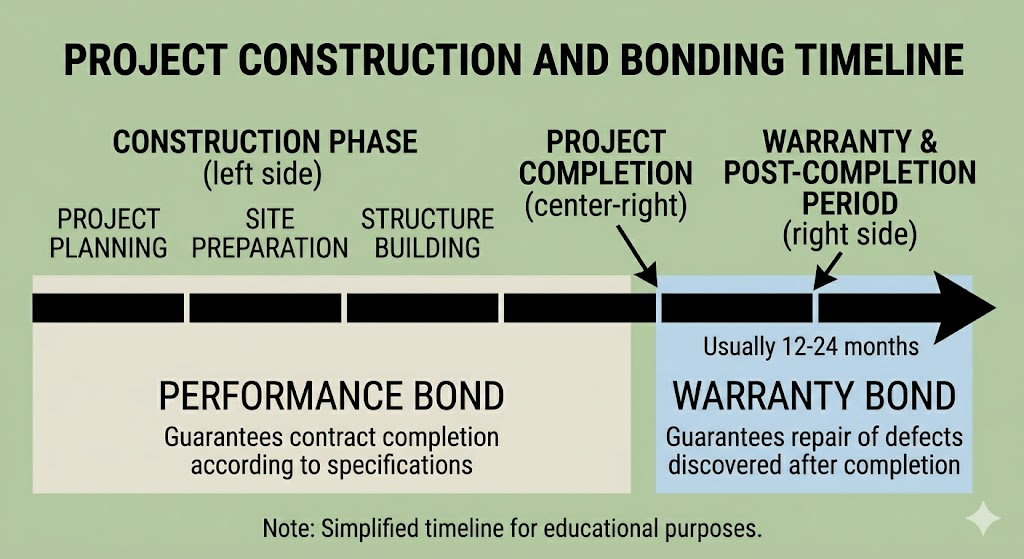
| When it applies | During construction | After project completion |
| What it guarantees | Contractor will complete the project | Contractor will fix post-completion defects |
| Trigger event | Contractor default, abandonment, or failure to complete | Defects in workmanship or materials discovered during warranty period |
| Duration | Until project completion | Typically 1-2 years after completion |
| Relationship | Often required before construction begins | Often replaces or reduces performance bond after completion |
In many contracts, the performance bond remains in effect during construction. Upon practical completion, it converts to or is replaced by a warranty bond at a reduced amount (often 50% of the original performance bond).
Who Needs a Warranty Bond?
| Required | Typically Not Required |
|---|---|
| Main contractors on public construction projects | Small residential projects (depending on local laws) |
| Subcontractors with direct warranty obligations to owners | Suppliers and manufacturers (their warranties are separate) |
| Design-build contractors | Service providers without construction scope |
| Developers with public improvement obligations |
Important note: The warranty bond covers the contractor’s own workmanship and materials. It does not extend to warranties provided by the contractor’s suppliers and manufacturers. Those are covered separately by product warranties.
Common Warranty Bond Amounts
Warranty bond amounts vary by contract and jurisdiction. Based on real contract examples:
| Contract Type | Typical Bond Amount |
|---|---|
| Public improvement projects | 10-20% of contract price |
| Municipal development projects | Amount specified by local ordinance |
| Design-build contracts | 10-15% of consideration |
| Standard construction contracts | 50% of performance bond amount (upon conversion) |
How Does a Warranty Bond Work?
A warranty bond works like this:
- Before construction begins: The owner requires the contractor to obtain a performance bond guaranteeing project completion.
- Upon project completion: The performance bond converts to a warranty bond (or a separate warranty bond is issued) at a reduced amount. This bond covers defect repair during the warranty period.
- During the warranty period: If a defect covered by the contract appears, the owner notifies the contractor. The contractor has an obligation to repair it.
- If the contractor fails to repair: The owner can file a claim against the warranty bond. The surety investigates the claim.
- Surety pays: If the claim is valid, the surety pays to have the defects corrected, up to the bond amount.
- Contractor reimburses: The contractor must repay the surety for the full amount of the claim.
How Long Does a Warranty Bond Last?
The warranty period is defined in the construction contract. Typical warranty bonds run for:
| Project Type | Typical Warranty Period |
|---|---|
| Standard commercial construction | 1 year |
| Public improvement projects | 1-2 years |
| AIA standard contract form | 2 years (adjustable) |
| Municipal development | As specified by local code |
The bond’s coverage matches exactly the contractor’s warranty obligations set forth in the construction contract. If the contract’s warranty terms are non-standard or overly broad, sureties may be reluctant to underwrite the bond.
How Much Does a Warranty Bond Cost?
The premium for a warranty bond is typically a percentage of the bond amount. Because warranty bonds represent lower risk than performance bonds (the project is already complete), premiums are generally lower.
| Bond Amount | Typical Premium Range |
|---|---|
| $50,000 | $500 – $2,500 per year |
| $100,000 | $1,000 – $5,000 per year |
| $500,000 | $5,000 – $15,000 per year |
Factors affecting cost: Credit score, business financials, years in operation, project history, and the specific warranty terms in your contract.
Tip: Review your warranty obligations carefully before signing the bond. Overly broad warranty terms can make the bond more expensive or harder to obtain.
What Does a Warranty Bond Cover?
| Covered | Not Covered |
|---|---|
| Defective workmanship discovered during warranty period | Warranties from suppliers and manufacturers |
| Faulty materials installed by contractor | Normal wear and tear |
| Failure to comply with warranty obligations in the contract | Damage caused by owner or third parties |
| Defects that appear after project completion | Defects discovered after warranty period expires |
How to Get a Warranty Bond
The process follows four simple steps, and specialists like Swiftbonds have placed these bonds for contractors nationwide, working with A.M. Best A-rated sureties. Here is how it works:
- Apply: Complete a surety bond application with your company financials, credit information, and a copy of the construction contract showing warranty obligations.
- Quote: Within hours, the surety returns a premium quote based on your credit profile, financial strength, and the warranty terms.
- Pay: You pay the premium via credit card, ACH, or wire transfer.
- File: The surety issues the bond, and you file it with the project owner as required by the contract.
Swiftbonds LLC
2025 Surety Bond Agency of the Year
4901 W. 136th Street
Leawood KS 66224
(913) 214-8344
https://swiftbonds.com/
Warranty Bonds in International Construction
In international construction projects, warranty bonds serve the same purpose but may be issued as bank guarantees rather than surety bonds. The warranty bond secures the employer from the failure of the contractor to remedy any defects in the works that could occur during the warranty period.
International warranty bonds are typically:
- Issued by banks with strong credit ratings (S&P A-rating or better)
- Structured as unconditional demand guarantees
- Valid for the warranty period defined in the contract (often 12 months)
Frequently Asked Questions
Q: Is a warranty bond the same as a maintenance bond?
Yes. Warranty bonds are also called maintenance bonds. Both terms refer to bonds that guarantee repair of defects discovered after project completion.
Q: Do I need a warranty bond if I already have a performance bond?
Often yes. The performance bond typically covers completion of the project. The warranty bond covers post-completion defects. Many contracts require both or convert the performance bond to a warranty bond at completion.
Q: How long does a warranty bond last?
Typically 1-2 years, depending on what your construction contract specifies. The AIA standard warranty bond form provides a 2-year term that can be adjusted.
Q: Who pays for a warranty bond?
The contractor pays the premium. The cost is typically built into the contractor’s bid and indirectly paid by the project owner as part of the total contract price.
Q: What happens if a claim is filed against my warranty bond?
If the claim is valid, the surety pays the owner to correct the defects. You must then reimburse the surety for the full amount of the claim.
Q: Does a warranty bond cover manufacturer defects in materials?
No. The warranty bond covers the contractor’s workmanship. Manufacturer defects are covered by product warranties from suppliers and manufacturers, not the contractor’s warranty bond.
Q: Can an owner require a warranty bond on a small project?
Yes. Any project owner can require a warranty bond as part of the construction contract. However, many small residential projects do not require them.
Q: What if my contract has non-standard warranty terms?
Sureties may be reluctant to underwrite warranty bonds with overly broad or unusual warranty terms. Review your contract’s warranty obligations carefully before applying for the bond.
5 Interesting Things About Warranty Bonds Not in the Top 10 Sites
- Warranty bonds are sometimes called “latent defects bonds.” In some jurisdictions and international contracts, warranty bonds that cover defects that may not appear until years later are specifically referred to as latent defects bonds, with longer warranty periods of 5-10 years for structural elements.
- The bond amount often steps down over time. Some warranty bonds are structured with decreasing coverage amounts. For example, 100% coverage in year one, 50% in year two, and 25% in year three, reflecting the decreasing risk of defects appearing over time.
- Banks issue warranty bonds too. In many countries, particularly in Europe and Asia, warranty bonds are more commonly issued as bank guarantees than surety bonds. The function is identical, but the issuer is a bank rather than a surety company.
- Warranty bonds protect owners from contractor insolvency. If your contractor goes out of business during the warranty period, the warranty bond ensures you still have recourse. The surety will pay to fix covered defects even if the contractor no longer exists.
- Some states require warranty bonds for home builders. Several U.S. states require residential home builders to post warranty bonds as a condition of licensing, protecting homeowners from defective workmanship on new home construction.
Conclusion
A warranty bond is a surety bond that guarantees a contractor will repair defects in workmanship or materials discovered after a project is completed. It is a three-party agreement between the contractor (principal), project owner (obligee), and surety company. The bond typically remains in effect for 1-2 years after project completion and covers the contractor’s warranty obligations as defined in the construction contract.
Warranty bonds differ from performance bonds, which guarantee project completion during construction. In many contracts, the performance bond converts to a warranty bond at a reduced amount upon project completion. The bond does not cover supplier or manufacturer warranties, nor does it cover damage caused by the owner or normal wear and tear.
Before applying for a warranty bond, review your construction contract’s warranty terms carefully. Overly broad obligations can make the bond more expensive or harder to obtain. Contractors with good credit and solid financials can expect premiums ranging from 1-5% of the bond amount annually.
Leave a Reply