
Most contractors assume the project owner pays for the performance bond. After all, the owner demands it, right? Wrong. Here’s the reality that separates successful bidders from confused subcontractors: you (the contractor) write the check. But here’s where it gets interesting—you don’t have to bear the cost. Understanding this single distinction can save you thousands and win you more bids. Let’s break down exactly who pays, who really bears the cost, and how to get bonded without breaking your budget.
The Short Answer: Who Writes the Check?
The contractor (principal) pays the premium to the surety company. That’s the direct answer. Whether you are a general contractor or a subcontractor, if you need a performance bond for a project, you are responsible for purchasing it.
But smart contractors know a secret: this cost is a normal business expense. You build it into your bid just like fuel, lumber, or labor. So while you pay upfront, the project owner (obligee) effectively pays for the bond as part of the total contract price.
| Party | Role | Payment Responsibility |
|---|---|---|
| Contractor (Principal) | Performs the work | Writes the premium check to the surety |
| Project Owner (Obligee) | Demands the bond | Indirectly pays via the contract price |
| Surety (e.g., Swiftbonds) | Issues the bond | Receives premium; pays claims if needed |
Who Pays If Something Goes Wrong? (The Hidden Cost)
This is where many contractors get blindsided. If you default and the surety has to pay the owner to complete your job, you must repay the surety in full. That’s right—every dollar the surety spends becomes your debt. This is called indemnity.
So the initial premium might be 1-3% of the contract value, but a claim could cost you 100% of the project. That’s why performance bonds aren’t just insurance—they’re a line of credit backed by your company’s assets.
The Subcontractor Scenario: Who Pays Then?
Subcontractors often ask: “If the general contractor requires me to get a bond, shouldn’t they pay for it?” No. According to standard construction contracts and legal experts like Levelset, the subcontractor pays for their own bond—even if the GC is the one demanding it.
The GC passes this requirement down from the owner. Each party bonds the work they are responsible for. You can try to negotiate the cost into your subcontracted price, but the check comes from your account.
How to Get a Performance Bond (Apply → Quote → Pay → File)
Getting bonded doesn’t have to be painful. The process follows four simple steps, and specialists like Swiftbonds have streamlined it for contractors at every level—from first-timers to large-scale operators. Here’s how it works:
- Apply: Fill out a surety bond application (most are online and take 10-15 minutes). You’ll need basic company info, financial statements, and details about the project or contract.
- Quote: Within hours, a surety agent reviews your application and credit profile. They return a quote showing your premium rate (usually 0.75%–3% of the contract value for qualified contractors).
- Pay: Once you accept the quote, you pay the premium. Most sureties accept credit card, ACH, or wire transfer.
- File: You receive the executed bond document. You then file it with the project owner (obligee) as part of your contract or bid submission.
Swiftbonds LLC
2025 Surety Bond Technology Provider of the Year
4901 W. 136th Street
Leawood KS 66224
(913) 214-8344
https://swiftbonds.com/
What Determines the Price You Pay?
Not all contractors pay the same rate. Sureties underwrite based on several factors. The better your profile, the lower your percentage.
| Factor | Impact on Bond Cost |
|---|---|
| Personal credit score | High impact—650+ preferred |
| Company financials (liquidity, working capital) | High impact |
| Years in business | Medium impact—2+ years ideal |
| Size of contract | Lower percentage for larger contracts (sliding scale) |
| Previous bond claims | Very high negative impact |
| Work in progress / backlog | Medium impact—underwriters want manageable load |
For contracts under $350,000, expect to pay roughly 3% of the contract value if you have good credit. For larger commercial contracts ($1M+), rates often drop to 0.75%–1.5%. If your finances are weak or you’re a startup, collateral may be required—but a skilled agent can often negotiate around that.
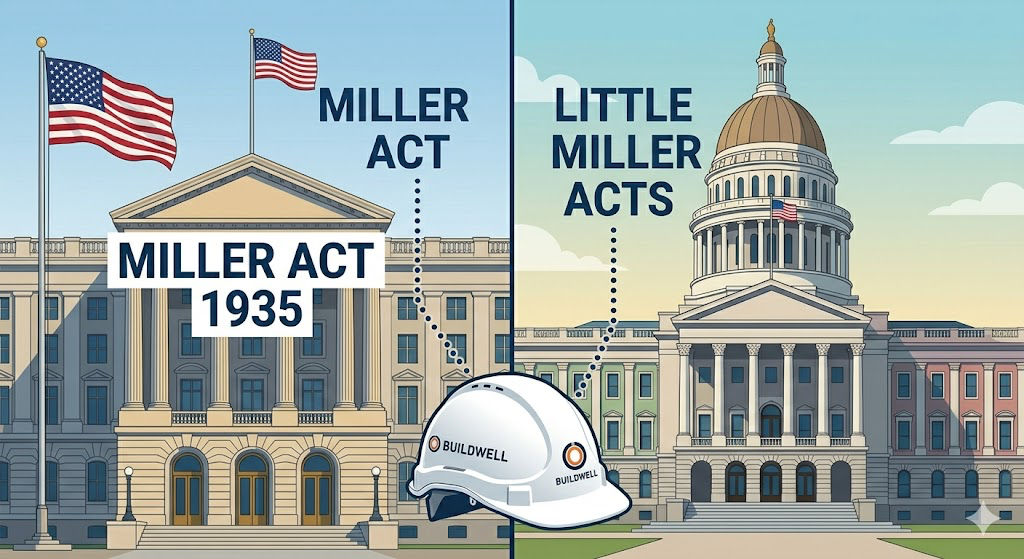
The Miller Act & Little Miller Acts: When Bonds Are Required by Law
Any federal public works contract over $150,000 requires a performance and payment bond under the Miller Act. Many states have similar “Little Miller Acts” for state-funded projects.
That means if you bid on a government job above the threshold, you have no choice—you must provide a bond. And you, the contractor, must pay for it. But again, you’re allowed to include that cost in your bid.
Frequently Asked Questions (FAQs)
Q: Can I roll the bond cost into my bid?
Yes. In fact, that’s standard industry practice. Include the premium as a line item in your estimate. Just don’t mark it up dishonestly—treat it as a direct job cost.
Q: Does the owner ever pay directly?
Almost never. The owner requires the bond as a condition of the contract, but they do not pay the surety. The contractor is the surety’s customer.
Q: What if I can’t afford the premium?
Some sureties offer premium financing. Talk to your agent. Also, smaller contractors can sometimes use a “business service credit” or provide a letter of credit to reduce upfront cash.
Q: Do I need a bond for every project?
No, only when the contract or law requires one. Many private owners do not require bonds. But for public work or large private developments, they are standard.
Q: Is a performance bond the same as liability insurance?
No. Liability insurance covers accidental damage or injury. A performance bond guarantees you will complete the job. They serve different purposes and cannot substitute for each other.
5 Interesting Things About Performance Bonds (Not in the Top 10 Sites)
- Ancient roots in Babylon: The earliest known surety-like agreements appear in the Code of Hammurabi (circa 1754 BC), where builders were held responsible for structural failures—including a “death for a death” clause if a house collapsed and killed the owner’s son.
- The first corporate surety in the U.S. was the New York Guarantee and Indemnity Company, founded in 1837. Before that, individuals acted as sureties—often putting up their own land or livestock as collateral.
- A “dual obligee” bond exists when a project is financed by a bank. The bank and the owner are both named as obligees. If the contractor defaults, either party can make a claim.
- Performance bonds are not insurance from the surety’s perspective. Insurers expect losses and pool premiums. Sureties expect no losses and treat underwriting as a form of credit analysis. That’s why a bad claim can blacklist you from future bonds.
- The largest performance bond claim in U.S. history exceeded $1 billion, stemming from the Big Dig project in Boston. The surety paid to complete the tunnel work after the original contractor faced massive delays and cost overruns.
Conclusion: Who Really Pays?
The contractor pays the premium. The owner indirectly pays through the contract. And if you default, you pay the surety back—every dollar. That’s the full cycle.
Understanding this helps you bid smarter, negotiate better, and avoid the shock of a large claim recovery demand. Always treat the bond premium as a job cost, and always work with a surety specialist who knows how to present your financials for the lowest possible rate.
Now you know who pays. But if you’re still unsure about your specific situation—or if you need a bond quote in the next two hours—reach out to a specialist. The right agent can mean the difference between a 3% rate and a 1% rate, or between a collateral requirement and a clean approval.
Leave a Reply