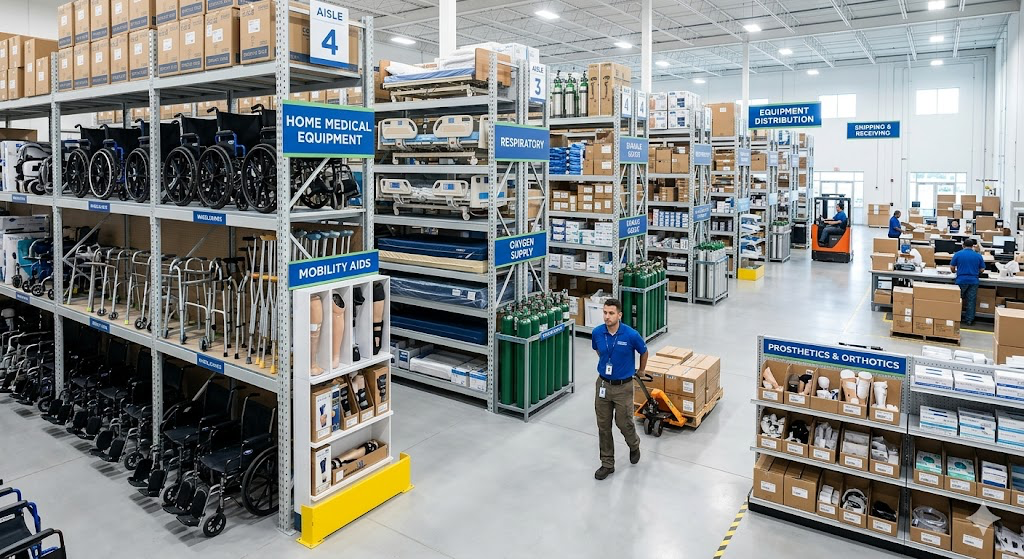
Medicare suppliers cannot bill for durable medical equipment, prosthetics, orthotics, or medical supplies without posting a DMEPOS bond first. The Centers for Medicare and Medicaid Services mandates these fifty thousand dollar surety bonds for every practice location where suppliers maintain National Provider Identifiers. One missed bond payment or coverage gap triggers immediate Medicare billing privilege revocation, cutting off revenue streams that keep medical equipment businesses operating. Since January 2009, federal regulations require DMEPOS bonds as prerequisites for Medicare enrollment, creating barriers that protect taxpayer dollars from fraudulent billing schemes.
DMEPOS bonds protect Medicare and Medicaid programs from financial losses caused by unethical suppliers while ensuring legitimate businesses maintain compliance with complex billing regulations. Unlike insurance policies that protect the policyholder, surety bonds protect government agencies and Medicare beneficiaries from suppliers who submit fraudulent claims or fail to meet quality standards.
What Is a DMEPOS Bond
A DMEPOS bond is a federal surety bond required by the Centers for Medicare and Medicaid Services before suppliers of durable medical equipment, prosthetics, orthotics, and medical supplies can enroll in Medicare billing programs. The bond creates a binding three-party agreement between the medical equipment supplier purchasing the bond (principal), the surety company issuing the bond (surety), and the Centers for Medicare and Medicaid Services requiring the bond (obligee).
This arrangement guarantees that DMEPOS suppliers will follow all Medicare billing rules, submit legitimate claims, maintain quality standards, and comply with federal healthcare regulations. The bond protects CMS and Medicare beneficiaries from financial losses when suppliers engage in fraudulent billing practices, submit false claims, or fail to provide products meeting quality criteria.
When suppliers violate Medicare requirements, CMS or designated contractors can file claims against bonds to recover losses up to the full fifty thousand dollar bond amount. The surety company pays valid claims within thirty days of receiving written notice from CMS, then seeks full reimbursement from the supplier. This reimbursement obligation distinguishes surety bonds from insurance and creates powerful financial incentives for ethical billing practices.
The Centers for Medicare and Medicaid Services implemented mandatory DMEPOS bonding through a final rule published in the Federal Register on January 2, 2009. Operating DMEPOS businesses without required bonds constitutes serious federal violations subject to Medicare billing privilege revocation, civil monetary penalties, and potential criminal prosecution for healthcare fraud.
DMEPOS Acronym and Covered Equipment
DMEPOS stands for Durable Medical Equipment, Prosthetics, Orthotics, and Supplies. This acronym encompasses medical products and devices that Medicare Part B covers for beneficiaries receiving treatment at home or in healthcare facilities.
Durable medical equipment includes items designed for repeated use over extended periods. Wheelchairs, hospital beds, walkers, canes, crutches, oxygen equipment, nebulizers, ventilators, patient lifts, and continuous positive airway pressure machines fall under this category. These products must withstand repeated use, serve primarily medical purposes, and remain appropriate for home use.
Prosthetics replace missing body parts or functions. Artificial limbs, breast prostheses following mastectomy, glass eyes, and prosthetic devices restoring function after amputation or congenital absence require DMEPOS bonds when suppliers bill Medicare for these products.
Orthotics support or correct body functions without replacing body parts. Braces, splints, compression garments, therapeutic shoes for diabetics, spinal supports, and custom-fitted orthopedic devices help patients maintain mobility and manage chronic conditions. Suppliers providing these products to Medicare beneficiaries need appropriate bonding.
Medical supplies include disposable or consumable items used with durable equipment or for ongoing treatment. Ostomy supplies, urological supplies, diabetic testing supplies, wound care materials, enteral nutrition products, and parenteral nutrition supplies represent common categories requiring bonding when billed to Medicare.
Who Needs a DMEPOS Bond
DMEPOS bonds apply to any business or individual seeking Medicare billing privileges for durable medical equipment, prosthetics, orthotics, or medical supplies. The bonding requirement extends across multiple healthcare sectors and business types.
Medical equipment suppliers operating retail storefronts, warehouses, or online businesses selling wheelchairs, hospital beds, oxygen equipment, or mobility devices must obtain DMEPOS bonds before enrolling in Medicare. These businesses represent the most common bond purchasers since durable medical equipment constitutes the largest segment of DMEPOS Medicare billing.
Prosthetic and orthotic manufacturers, distributors, and fitting specialists providing artificial limbs, braces, compression garments, or custom orthopedic devices need bonds for Medicare enrollment. These specialized suppliers often serve patients with long-term needs requiring ongoing Medicare coverage.
Pharmacies dispensing diabetic testing supplies, ostomy products, wound care materials, or enteral nutrition to Medicare beneficiaries require DMEPOS bonds. Since January 2019, the Centers for Medicare and Medicaid Services extended bonding requirements to dentists processing Medicare and Medicaid payments for covered dental supplies and equipment.
Home health agencies providing durable medical equipment as part of home healthcare services need bonds when billing Medicare separately for equipment beyond bundled service payments. Oxygen suppliers maintaining filling stations and delivering oxygen concentrators, tanks, or liquid oxygen systems to Medicare patients face mandatory bonding requirements.
Companies with multiple practice locations must obtain separate fifty thousand dollar bonds for each National Provider Identifier. A medical equipment supplier operating five retail locations needs two hundred fifty thousand dollars in total bonding or five separate fifty thousand dollar bonds. Sole proprietorships receive exemptions from the multiple-location requirement and need only one bond regardless of locations.
Certain healthcare providers receive exemptions from DMEPOS bonding requirements. Specific physicians and non-physician practitioners, state-licensed physical therapists, state-licensed occupational therapists, orthotic and prosthetic personnel meeting state licensing requirements, and DMEPOS suppliers owned or operated by federal, state, local, or tribal government agencies do not need bonds. Suppliers should contact their enrollment contractors to confirm exemption eligibility.
Bond Amount Requirements
The Centers for Medicare and Medicaid Services establishes a flat fifty thousand dollar bond amount for each National Provider Identifier maintained by DMEPOS suppliers. This standardized amount applies universally across all states, supplier types, and equipment categories.
The National Provider Identifier serves as the trigger for bond requirements. Each unique NPI representing a distinct practice location requires a separate fifty thousand dollar bond. Medical equipment suppliers cannot share bonds across multiple NPIs or practice locations except for sole proprietorships.
| Practice Locations | NPIs Required | Bond Amount per NPI | Total Bonding Required |
|---|---|---|---|
| 1 location | 1 NPI | $50,000 | $50,000 |
| 3 locations | 3 NPIs | $50,000 | $150,000 |
| 5 locations | 5 NPIs | $50,000 | $250,000 |
| 10 locations | 10 NPIs | $50,000 | $500,000 |
Suppliers adding new practice locations must post new fifty thousand dollar bonds or riders to existing bonds before the National Provider Enrollment contractors process location additions. The enrollment system will not activate billing privileges for new locations without corresponding bond documentation.
Suppliers purchasing or transferring businesses, forming new entities, or experiencing ownership changes must submit new surety bonds as part of enrollment applications. The Centers for Medicare and Medicaid Services may require elevated bond amounts exceeding fifty thousand dollars for suppliers designated as high-risk based on compliance history, prior violations, or other risk factors.
Some states impose additional Medicaid DMEPOS bond requirements beyond federal Medicare bonds. State Medicaid agencies may mandate separate bonds with different amounts, coverage terms, or filing procedures. Multi-state suppliers must navigate both federal Medicare bonding and individual state Medicaid bonding requirements.
DMEPOS Bond Costs
DMEPOS bond premiums vary based on applicant credit profiles, business financials, and industry experience. Most suppliers pay annual premiums ranging from two hundred fifty to one thousand dollars for standard fifty thousand dollar bonds.
Pharmacies and established medical equipment businesses with excellent credit typically qualify for preferred rates around five dollars per thousand dollars of bond coverage. A pharmacy needing a fifty thousand dollar bond would pay approximately two hundred fifty dollars annually. Physicians, opticians, and orthotic/prosthetic specialists with strong financials receive similar pricing.
| Applicant Type | Credit Score | Annual Premium for $50,000 Bond |
|---|---|---|
| Pharmacy | 700+ | $250 – $300 |
| Established supplier | 700+ | $300 – $500 |
| New business | 650-699 | $500 – $750 |
| Poor credit | 600-649 | $750 – $1,500 |
| High risk | Below 600 | $1,500 – $2,500 |
New DMEPOS suppliers without established operating history face higher premiums regardless of personal credit scores. Surety companies view startup medical equipment businesses as higher risk due to lack of proven compliance records and uncertain revenue stability. New suppliers with excellent personal credit might pay five hundred to seven hundred fifty dollars annually.
Applicants with credit scores between 600 and 699 pay premiums ranging from seven hundred fifty to one thousand five hundred dollars for fifty thousand dollar bonds. Prior tax liens, collections, bankruptcies, or late payments increase costs within this range. Credit scores below 600 trigger specialized high-risk underwriting with premiums between one thousand five hundred and two thousand five hundred dollars.
Suppliers operating multiple locations compound costs proportionally. A company with five locations needing two hundred fifty thousand dollars in total bonding would pay one thousand two hundred fifty to two thousand five hundred dollars annually with excellent credit, or seven thousand five hundred to twelve thousand five hundred dollars with poor credit.
Business financial strength influences pricing for all applicants. Surety companies evaluate profit margins, revenue trends, liquid assets, debt ratios, and accounts receivable aging. Strong financials can reduce premiums by ten to twenty percent even for applicants with moderate credit scores. Weak financials or negative cash flow can increase premiums or trigger collateral requirements.
Prior Medicare compliance history significantly impacts costs. Suppliers with clean records, no prior bond claims, and no billing violations receive preferred rates. Those with prior civil monetary penalties, Medicare exclusions, or quality standard violations face higher premiums or outright bond denials from standard markets.
Three-Party Structure and How Bonds Work
Every DMEPOS bond involves three distinct parties with specific rights and obligations creating the surety relationship. The principal is the medical equipment supplier that purchases the bond and pays the annual premium. The obligee is the Centers for Medicare and Medicaid Services requiring the bond through federal regulations. The surety is the insurance company approved by the U.S. Department of the Treasury that issues the bond and guarantees payment of valid claims.
When DMEPOS suppliers violate Medicare requirements, CMS or designated contractors file claims against bonds to recover financial losses. Common claim triggers include submitting fraudulent Medicare claims for equipment never delivered, billing for services not provided or unnecessary equipment, violating anti-kickback statutes through illegal referral arrangements, failing to meet DMEPOS quality standards during accreditation reviews, operating without required CMS-approved accreditation, and submitting claims with systematically inflated pricing.
The claims process begins when CMS or Medicare contractors submit written claims to surety companies containing sufficient evidence establishing liability. Claims must document specific violations, quantify financial damages, and provide supporting evidence such as audit findings, overpayment determinations, or civil monetary penalty assessments.
Surety companies conduct investigations reviewing claim documentation, requesting supplier responses, and analyzing evidence from both parties. Investigations focus on verifying violation occurrences, confirming overpayment amounts, and determining whether supplier actions triggered bond obligations under federal regulations.
When surety companies determine claims are valid, they must pay CMS or designated contractors within thirty days of receiving written notice. Payment amounts can include the amount of any unpaid claim plus accrued interest for which the supplier is responsible, civil monetary penalties or assessments imposed by CMS or the Office of Inspector General plus accrued interest, and any other amounts due under Medicare regulations up to the fifty thousand dollar bond limit.
The supplier then owes the surety for the entire claim payment plus investigation costs, legal fees, and interest. This reimbursement obligation is absolute and enforceable through legal action regardless of the supplier’s financial condition or ability to pay. Failure to repay surety companies results in immediate bond cancellation, Medicare billing privilege revocation, collection lawsuits, asset seizures, and potential bankruptcy proceedings.
Surety companies aggressively pursue reimbursement because they guarantee bonds but assume no ultimate financial liability. The principal bears all responsibility for valid claims. A single large claim can exceed annual premium payments by hundreds of times, creating devastating financial consequences for suppliers engaging in fraudulent billing.
Federal Enrollment Requirements
Suppliers must complete a comprehensive six-step enrollment process before receiving Medicare billing privileges and DMEPOS bond requirements represent only one component of this process.
Step one requires obtaining DMEPOS accreditation from a CMS-approved organization. Accreditation organizations verify that suppliers meet required DMEPOS Quality Standards through comprehensive reviews and conduct periodic unannounced site visits ensuring ongoing compliance. The Centers for Medicare and Medicaid Services currently approves multiple accreditation organizations including the Accreditation Commission for Health Care, Community Health Accreditation Partner, DNV Healthcare, The Compliance Team, and the Joint Commission.
Step two involves obtaining National Provider Identifiers for each practice location through the National Plan and Provider Enumeration System. Suppliers apply for NPIs online through the NPPES website and can search the NPI Registry to verify existing numbers. Each distinct practice location where suppliers maintain inventory and serve patients requires separate NPIs, triggering corresponding bond requirements.
Step three requires completing Medicare enrollment applications through the Provider Enrollment, Chain and Ownership System. PECOS provides the online enrollment platform where suppliers submit detailed business information, ownership details, practice locations, and supporting documentation. The system includes video and print tutorials guiding applicants through complex enrollment requirements.
Step four mandates paying Medicare application fees. The application fee for 2023 was six hundred eighty-eight dollars, payable through the PECOS fee payment system. Fee amounts change annually based on federal regulations and inflation adjustments.
Step five involves working with National Provider Enrollment contractors processing applications. Effective November 7, 2022, the National Supplier Clearinghouse no longer processes DMEPOS enrollments. The National Provider Enrollment DMEPOS East and West contractors now handle all applications, with jurisdiction determined by supplier geographic location.
Step six requires posting surety bonds with enrollment contractors. Suppliers must submit original bond documentation from U.S. Department of the Treasury certified surety companies for each National Provider Identifier before contractors activate billing privileges. Electronic bond filing streamlines this process for many suppliers.
How to Get a DMEPOS Bond
Getting a DMEPOS bond requires four straightforward steps: application, quote, payment, and filing.
First, complete a surety bond application providing personal and business information. Applications require supplier names, social security numbers or employer identification numbers, business details, National Provider Identifiers, practice locations, and ownership information. Most applications take fifteen to twenty minutes depending on the number of locations requiring bonding.
Second, receive your bond quote from the surety company. Underwriters evaluate credit reports, business financial statements, Medicare compliance history, and industry experience to determine premium rates. Applicants with excellent credit typically receive instant quotes for standard fifty thousand dollar bonds. Those with credit challenges or multiple locations requiring large total bonding may need additional documentation including business tax returns, profit and loss statements, balance sheets, and Medicare billing history.
Third, pay your annual premium. Surety companies accept credit cards, debit cards, electronic checks, and wire transfers. Payment processing takes minutes for electronic methods. Some companies offer premium financing allowing monthly payments instead of full annual premiums upfront, particularly helpful for suppliers with multiple locations facing large total bonding costs.
Fourth, file your bond with the appropriate National Provider Enrollment contractor. Surety companies provide original bond documentation on forms meeting CMS specifications. Suppliers submit bonds to NPE DMEPOS East or NPE DMEPOS West contractors based on geographic location. Swiftbonds streamlines this entire process, offering same-day bond issuance for qualified applicants and expert guidance navigating federal enrollment requirements.
Swiftbonds LLC
2025 Surety Bond Technology Provider of the Year
4901 W. 136th Street
Leawood KS 66224
(913) 214-8344
https://swiftbonds.com/
Bond Term and Maintenance Requirements
DMEPOS bonds operate as continuous obligations without fixed expiration dates or renewal terms. This continuous structure differs from typical annual surety bonds and creates ongoing liability for surety companies until formal cancellation occurs.
Suppliers pay annual premiums to maintain continuous coverage. Most surety companies invoice renewal premiums thirty to sixty days before anniversary dates. Timely premium payment is critical because even one-day gaps in bond coverage trigger immediate Medicare billing privilege suspensions.
Either suppliers or surety companies can cancel bonds by providing written notice at least thirty days before effective cancellation dates. Suppliers canceling bonds must submit replacement bonds from different surety companies before cancellation effective dates to avoid coverage gaps. The National Provider Enrollment contractors require new bonds at least thirty days prior to previous bond expirations.
When replacement bonds are posted during the term of original bonds, new sureties become liable for any overpayments, civil monetary penalties, or assessments incurred by suppliers beginning with the effective date of new bonds. Original sureties remain liable for claims arising from periods when their bonds were active even after replacement bonds take effect.
Gaps in bond coverage create serious consequences. The National Provider Enrollment contractors will not pay claims for any items or services provided by suppliers during periods without active bonds. Suppliers lose revenue for all Medicare billing during gap periods even if they later restore bonding. These payment denials can devastate cash flow for equipment suppliers dependent on Medicare reimbursement.
Suppliers must report changes in business circumstances within thirty days to avoid Medicare billing privilege revocation. Changes requiring updates include ownership transfers, practice location additions or closures, adverse legal actions, civil monetary penalties, and Medicare exclusions. Adding practice locations requires new bonds before enrollment contractors activate billing privileges for new NPIs.
State Medicaid DMEPOS Bonds
Some states impose separate Medicaid DMEPOS bond requirements beyond federal Medicare bonds. State Medicaid agencies establish their own bonding mandates, amounts, and filing procedures for suppliers billing state Medicaid programs.
State Medicaid bonds typically mirror federal fifty thousand dollar amounts but some states require higher or lower coverage based on local regulations. State bonds protect state Medicaid programs from fraudulent billing similar to how federal bonds protect Medicare. Suppliers billing both Medicare and state Medicaid programs need both federal and state bonds.
State Medicaid bond requirements vary significantly across jurisdictions. Some states accept federal Medicare bonds as sufficient proof of financial responsibility for Medicaid billing. Other states mandate completely separate bonds with different obligees, coverage terms, and filing locations. Suppliers must research specific state requirements in every jurisdiction where they bill Medicaid.
Multi-state DMEPOS suppliers face complex bonding landscapes navigating federal Medicare requirements plus individual state Medicaid mandates. A supplier billing Medicare and Medicaid in five states might need one federal fifty thousand dollar bond per location plus separate state Medicaid bonds for each state depending on local regulations.
State Medicaid agencies typically require bonds as conditions for Medicaid provider enrollment. Application processes parallel Medicare enrollment with accreditation requirements, provider identifier assignments, and bond documentation submissions. State agencies maintain approved surety company lists similar to the U.S. Department of the Treasury certified surety roster.
Frequently Asked Questions
What is a DMEPOS bond?
A DMEPOS bond is a federal surety bond required by the Centers for Medicare and Medicaid Services before suppliers of durable medical equipment, prosthetics, orthotics, and medical supplies can enroll in Medicare billing programs. The bond guarantees that suppliers will follow Medicare billing rules, submit legitimate claims, and maintain quality standards. DMEPOS stands for Durable Medical Equipment, Prosthetics, Orthotics, and Supplies.
How much does a DMEPOS bond cost?
DMEPOS bonds typically cost between two hundred fifty and two thousand five hundred dollars annually for the standard fifty thousand dollar bond amount. Pharmacies and suppliers with excellent credit pay approximately two hundred fifty to three hundred dollars yearly. New businesses or suppliers with moderate credit pay five hundred to one thousand dollars. Poor credit applicants pay one thousand five hundred to two thousand five hundred dollars. Costs multiply for suppliers with multiple practice locations.
Who needs a DMEPOS bond?
Medical equipment suppliers, prosthetic and orthotic providers, pharmacies dispensing covered supplies, home health agencies billing separately for equipment, oxygen suppliers, and dentists processing Medicare payments need DMEPOS bonds. Any business or individual seeking Medicare billing privileges for durable medical equipment, prosthetics, orthotics, or medical supplies must obtain bonds. Exemptions apply to certain physicians, therapists, government agencies, and state-licensed practitioners.
How much bonding is required for multiple locations?
DMEPOS suppliers must post fifty thousand dollars in bonding for each National Provider Identifier they maintain. Multiple practice locations require separate NPIs and corresponding bonds. A supplier with five locations needs two hundred fifty thousand dollars total bonding or five separate fifty thousand dollar bonds. Sole proprietorships receive exemptions and need only one bond regardless of locations.
What happens if someone files a claim against my bond?
When CMS or Medicare contractors file claims against DMEPOS bonds, surety companies investigate and must pay valid claims within thirty days. The supplier must then reimburse the surety for the entire claim payment plus investigation costs and interest. Failure to repay results in bond cancellation, Medicare billing privilege revocation, and collection lawsuits. Claims can arise from fraudulent billing, quality standard violations, or civil monetary penalties.
Can I get a DMEPOS bond with bad credit?
Yes, specialized surety programs approve DMEPOS bonds for applicants with bad credit including those with scores below 600, bankruptcies, tax liens, or collections. These high-risk programs charge higher premiums typically between one thousand five hundred and two thousand five hundred dollars annually for fifty thousand dollar bonds. Some applicants may require collateral or personal guarantees.
How long does it take to get a DMEPOS bond?
Qualified applicants with good credit receive instant approval and same-day bond issuance for DMEPOS bonds. Poor credit or multiple locations requiring manual underwriting take three to seven business days. Once bonds are issued, suppliers must submit documentation to National Provider Enrollment contractors who process enrollment applications, adding additional time before billing privileges activate.
What is the National Provider Identifier?
The National Provider Identifier is a unique identification number issued through the National Plan and Provider Enumeration System for each healthcare provider practice location. DMEPOS suppliers need separate NPIs for each distinct location where they maintain inventory and serve patients. Each NPI triggers a separate fifty thousand dollar bond requirement except for sole proprietorships.
When did DMEPOS bonds become mandatory?
The Centers for Medicare and Medicaid Services published a final rule in the Federal Register on January 2, 2009, mandating DMEPOS bonds for Medicare enrollment. The requirement took effect May 4, 2009, for new suppliers or those with ownership changes. Existing suppliers had until October 2, 2009, to comply. The regulation remains in effect today with periodic updates to enrollment procedures.
Do DMEPOS bonds cover state Medicaid programs?
Federal DMEPOS bonds required for Medicare enrollment typically do not automatically cover state Medicaid programs. Some states impose separate Medicaid DMEPOS bond requirements with different amounts, obligees, and filing procedures. Suppliers billing both Medicare and state Medicaid programs should verify whether states accept federal bonds or require separate state-specific bonds.
Conclusion
DMEPOS bonds protect Medicare and Medicaid programs from fraudulent billing while enabling legitimate medical equipment suppliers to serve beneficiaries across the United States. These fifty thousand dollar surety bonds transfer the financial burden of healthcare fraud prevention from government agencies to private insurance markets, creating a self-regulating system that screens out high-risk operators while providing financial recourse for taxpayer losses.
Understanding bond requirements, cost factors, claims processes, and enrollment procedures helps DMEPOS suppliers maintain proper compliance and avoid costly violations. The Centers for Medicare and Medicaid Services requires fifty thousand dollar bonds for each National Provider Identifier, with premiums typically ranging from two hundred fifty to two thousand five hundred dollars based on credit profiles and business financials.
Maintaining continuous bond coverage, understanding the three-party structure, navigating federal enrollment requirements, and staying current on Medicare billing regulations keeps DMEPOS suppliers compliant and competitive. The bonding process typically takes one to seven days for qualified applicants, making it straightforward to meet enrollment requirements and start billing Medicare legally.
Five Facts About DMEPOS Bonds
The DMEPOS bonding requirement emerged from widespread Medicare fraud investigations revealing billions in fraudulent billing during the mid-2000s. Federal prosecutors uncovered schemes where suppliers billed Medicare for equipment never delivered, collected payments for medically unnecessary devices, and operated shell companies billing Medicare while providing no legitimate services. The Government Accountability Office estimated Medicare lost over one billion dollars annually to DMEPOS fraud before mandatory bonding, driving the 2009 regulatory changes.
Surety companies initially refused to write DMEPOS bonds when the requirement first took effect in May 2009 because actuarial data showed claim frequencies exceeding thirty percent in some markets. The medical equipment industry had no prior bonding history, making it impossible to calculate accurate risk premiums. Many legitimate suppliers faced enrollment delays lasting six to twelve months while surety markets developed capacity and pricing models for this new bond category.
The continuous bond term structure without fixed expiration dates creates perpetual liability for surety companies extending years beyond premium payment periods. A surety company that writes a DMEPOS bond in 2015 and collects five years of premium before the supplier switches sureties in 2020 remains liable for any Medicare overpayments or civil monetary penalties arising from the supplier’s 2015-2020 billing activity. This tail liability can surface five to ten years after bonds are replaced.
Dentists became subject to DMEPOS bonding requirements in January 2019 when the Centers for Medicare and Medicaid Services expanded covered dental services and equipment categories. This unexpected expansion caught thousands of dental practices unprepared, creating urgent bonding needs for practitioners who never previously billed Medicare. The dental industry lobbied unsuccessfully to exclude dentists from DMEPOS bonding mandates.
State Medicaid DMEPOS bonding requirements remain inconsistent across jurisdictions with no federal standardization. California requires separate fifty thousand dollar Medicaid bonds while Texas accepts federal Medicare bonds as sufficient proof of financial responsibility for state Medicaid billing. This patchwork regulation creates compliance challenges for national suppliers who must track different bonding requirements across all fifty states plus the District of Columbia and U.S. territories.
Leave a Reply